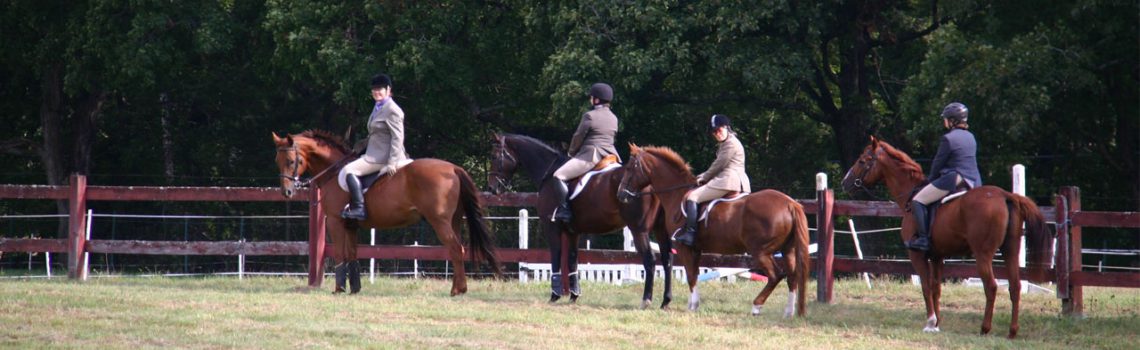
Don’t forget to water your grounding poles!

Electric fencing is only as good as your grounding soluion.

Electric fencing is only as good as your grounding soluion.

While other folks are out watering their gardens in the morning, you’ll see me out in the pasture diligently watering the grounding rods for my electric fence.

We’ve had a relatively dry spring and although I have two grounding poles daisy chained together for my fencing that are on a hill with fairly sandy soil. That means when it’s dry (or frozen) the zap goes out of the fence.

I really like electric fencing. It’s easy to put up, easy for me to change for different configurations, and most of the time the horses show a lot of respect for it. However, when the ground is very dry (or frozen) the fence doesn’t ground. For electricity to flow in a system, such as an electric fence, there must be a
complete and closed circuit. The electrical current must travel from its source through the circuit and back to the source. This flow only occurs when a charged wire of the fence becomes grounded.

Improper fence grounding causes about 80% of all electric fence failures and it’s easy to see why. Even when you daisy chain grounding rods together, even when you have a charger with enough juice to make your hair curl, if there isn’t enough moisture in the soil to enable the electrons to flow, there is simply no zap.

So, to keep my fence buzzing with electric current, first I packed the area around the hole with rock salt (which increases the ionization of the soil). Then I water the grounding poles on dry days.

There are other solutions: You can now buy bi-polar electric tape that doesn’t need to be grounded. If it had been available when I installed my fence, I certainly would have gone that route. But with the fencing already installed, I think I’ll just keep on watering my grounding rods!

Who will ride Mine That Bird in the Belmont?

A great photo of Mine That Bird by Sarah K. Andrew.

A great photo of Mine That Bird by Sarah K. Andrew.

Mine That Bird is having a hard time keeping a jockey. You’d think that a horse that wins the Kentucky Derby and comes in second in the Preakness would not be looking for a ride two weeks before the last leg of the Triple Crown, but circumstances have worked against him.

Calvin Borel thought he’d never have to choose between Rachel Alexandra and Mine That Bird as RA’s owners at the time said they wouldn’t run her against the boys. Only when she was sold to Jess Jackson did a conflict occur. Did Borel make the right choice? He’s been her regular rider and didn’t want to let another jockey take his place.

Mike Smith had already committed to riding in Madeo in the Whittingham Stakes — long before getting the ride on MTB. More importantly, Smith has a longstanding relationship with Madeo’s owners, Jerry and Ann Moss, and with their trainer, John Shireffs. He is the regular rider for another of their horses, Zenyatta, a contender for the Horse of the Year. It makes no sense (professionally) for Smith to make any other choice.

There is a lot of speculation as to whether Rachel Alexandra will run in the Belmont. If she doesn’t it would free up Borel to ride MTB but will MTB’s connections wait or seek out a third jockey.

In the meantime, it appears that Mine That Bird is taking matters into his own hooves. This was posted on Pedigree Query:

Post subject: Ad on Craig’s List. “Good Things Come in Small Packages”

——————————————————————————–
World Class Athelete seeks partner for thrills, chills, big bucks and maybe a good neck rub or two (I’ll miss Mike). I’m cute (some people say adorable), fit and ran the fastest last quarter of the Kentucky Derby since You Know Who!

I know that somewhere, out there in the racing world, there’s the right jockey for me. Could it be you?

Patience is a must. I start slow but once I get going–let me put it this way–you’ll never forget the ride!

Experience at winning mile and a half grade one races preferred, but I’ll accept the common sense to just get the hell out of my way and let me do my thing. Wusses need not apply–you point me there and baby, I’m going–even if it looks like we are about to be turned into a horse and jockey sandwich by a couple of 17 hand brontosauruses in blinkers.

Must absolutely love the idea of destroying the egos of horses that cost more than the national debt of some 3rd world countries with a horse that originally cost less than a used Toyota. Better yet, must love the idea of destroying the egos of the jokers who shelled out more than more than the national debt of some 3rd world countries for these losers with a horse that originally cost less than a used Toyota.

Long term relationship preferred but will accept a one race stand. If you can’t be in New York, ready to go, on June 6, 2009 don’t even bother to respond to this ad. Seriously, I’m starting to get a complex about this.

I’d love it if you’d be willing to relocate to New Mexico but I’m willing to accept a committed long distance relationship.

Please send picture and resume to my trainer, chipwooley@ridethebird.com. Or, you know what, that cowboy hasn’t exactly done me much good in the long term relationship department. Contact me directly at mindthatbird@ridethebird.com.

Let’s make history together.

As for a certain filly and that two-timing Cajun–I’ll see you at Belmont–you, me, my new jockey and the Big Sandy.
_________________

More reasons to practice your two-point position.

Darren Chiachia demonstrates a perfect half seat while on cross country.

Darren Chiachia demonstrates a perfect half seat while on cross country.

Getting in shape to ride in a balanced half seat is painful. I can remember many lessons when my legs ached and my balance was precarious.

I had instructors who insisted on perfecting my two point position. Maybe you’ve been there: arms out to the side, arms overhead, no stirrups, and endless circles and figures ridden in either a three point, or half seat, (where most of your weight is in your legs but your seat lightly touches the saddle) or two point (where you hover above the saddle and all your weight is in your legs). As you know it’s difficult to sustain without practice.

When I learned to ride in two- or three-point the object was to develop a solid base of support for jumping or to free up my horse when galloping cross country. The two point position is de rigueur in the hunter and equitation ring where having your butt touch the saddle is practically sacriligious.

However, it turns out there’s another reason why you should get up out of the saddle: it’s good for your horse’s back.

A study, “A comparison of forces acting on the horse’s back and the stability of the rider’s seat in different positions at the trot,” was published in the May 2009 Veterinary Journal. The study was conducted by the Movement Science Group Vienna, Clinical Department for Companion Animals and Horses, University of Veterinary Medicine, Vienna. The study was summarized in The Horse, Researchers Examine Effects of Rider Stability.

Scientists with the University of Veterinary Medicine Vienna’s Movement Science Group measured the forces created when an experienced rider rode 10 different sound horses at the sitting trot, rising trot, and in the two-point (jumping) position. The rider held each position for 20 seconds.

“In this study we wanted to see which seat position is the most stable for the rider, and which position least stressful for the horse,” said Christian Peham, PhD, head of the Movement Science Group.

In each riding position, the researchers measured rider stability by determining the movement of the center of pressure (COP) along the transverse (X, or side-to-side) and longitudinal (Y, or up and down) axis. The researchers used a statistical calculation to determine the highest and lowest points of stability in the three different positions.

The sitting trot created the highest load, followed by the rising trot and the two-point seat. In the two-point position, the rider’s back is most stable, placing the least amount of load on the horse’s back. In all positions movement on the Y-axis accounted for the differences in load. The rider’s transverse movement had no effect.

According to Hilary M. Clayton, BVMS, PhD, McPhail Dressage Chair in Equine Sports Medicine at Michigan State University, the two-point seat puts less load on the horse’s back because the joints in the rider’s legs, especially the knee and, to a lesser extent the hip and ankle, act as shock absorbers.

“As the horse’s body bounces up and down, the rider’s joints flex and extend to maintain the rider’s back in a consistent position with the horse, moving up and down beneath him/her,” Clayton explained.

The cushioning effect of the rider’s joints avoids large fluctuations in force on the horse’s back as compared with the sitting trot, in which the rider’s body oscillates with the horse.

For young horses, or horses recovering from back problems, a combination of the rising trot and two-point positions provides optimal training conditions without overloading the horse’s back. According to Peham, “These positions are the most stable for the rider, and least stressful for the horse.”

I’ve gotten lazy about practicing my two point. I guess it’s time to think of my horse and feel the burn.

Sometimes it’s best to let your horse speak for you!

Thanks to Fran Jurga for posting this. I laughed out loud when I first saw it.

I think we can all relate to being told that riding isn’t exercise because the horse does all the work, but telling Zara Phillips (grand-daughter of the Queen and one of the best known eventing riders in England) takes chutzpah. Her horse, Toytown is spectacular!

Stem cell therapy for horses shows promise for human treatment

Stem cell therapy in humans is not only controversial, but it’s been extremely limited in its scope. Now, stem cell research pioneered to help horses recover from tendon and ligament injuries may help humans recover from injuries to Achilles tendons.

Stem cell therapy in horses has been going on for several years and has shown real promise in helping tissues regenerate, rather than repairing injuries by forming scar tissue. According an article published in the Horse, Linda Black, DVM, PhD, director of Clinical Development, Vet-Stem, Inc. explains that, “Stem cells assist the healing process by decreasing inflammation, providing growth support, and by their ability to develop into other cell types.”

Stem cells are immature cells that are produced by the body that can regenerate into any type of cell the body needs. In horses, stem cells are typically obtained either from fat or bone marrow of adult horses but recent developments enable the collection of stem cells from equine umbilical cords which can be preserved frozen, cultured and differentiated into a host of cell lines including bone, cartilage, fat and those of the nervous system. In stem cell therapy, the stem cells are harvested, cultured and purified. Then the cell sample is injected into the injury site where the cells grow into the type of cell needed to repair the injury.

Stem cells are used to help treat bowed tendons.

Stem cells are used to help treat bowed tendons.

A company called Vet-Stem in California is using stem cells to treat bowed tendons, injured ligaments and fractures using stem cells derived from the animal’s own fat cells. After a tendon or ligament tear, horses can permanently lose mobility and strength when they heal because they develop scar tissue at the injury site. Scar tissue is fibrous and lacks the elasticity and strength of the original tendon tissue. However, stem cells circumvent this problem because they have the capacity to become a variety of different cell types, so they enable the growth of new tendon tissue instead of scar tissue at the site of the injury.

While the jury is still out, success stories are coming in and vets are excited about being able to offer a more proactive treatment to injuries beyond rest. And human researchers are studying the equine trials with great interest. It’s now reported that human trials, using stem cells to treat Achilles tendon injuries, which are notoriously difficult to treat, will begin in 2111.

According to an article in The Horse, The State of Stem Cell Therapy, Roger Smith, MA, VetMB, DEO, MRCVS, PhD, Dipl. ECVS, professor of equine orthopaedics at the Royal Veterinary College in Herts, U.K., and Lisa Fortier, DVM, PhD, Dipl. ACVS, associate professor of clinical sciences at Cornell University reported on the state of the research at the 2007 American Association of Equine Practitioners Convention. The entire article is worth a read.

Smith reported that lab animal studies have found that treatment of surgically created tendon and ligament lesions with MSCs results in better tissue organization, composition, and mechanics compared to controls. In addition, an equine study in the U.K. using BM-MSCs found that in 82 of 168 treated racehorses that were available for follow-up after one year, there was a 78% success rate (no re-injury) compared to 43% of horses conservatively treated in another study–a 35% improvement in success rate. More specifically, the success rate in National Hunt horses (in training and racing) was 82% of 71 horses, and the success rate in 11 flat racing horses was 50%. Twenty-four sport horses in other disciplines had an 87% success rate, compared to a 57-77% success rate with conservative treatment in another study.

More recent data from Cornell University, published in 2009, is also encouraging: Stem Cell Therapy Effective for Tendonitis in Cornell study

To evaluate the effect of mesenchymal stem cells (the stem cells harvested from bone marrow and capable of transforming to tendon cells) on tendon healing, researchers created tendonitis in the SDFT of both forelimbs. Six days later, stem cells harvested from each horse’s own bone marrow were injected into one of the SDFT lesions. The untreated (control) limb was injected with 1 ml saline.

Researchers performed ultrasound examinations of the tendons at 0, 2, 4, 6, and 8 weeks and mechanical, biochemical, and microscopic evaluation of the tendons 8 weeks after treatment.

“The biochemical composition of the treated and untreated tendons were similar 8 weeks after treatment; however, tendons injected with the stem cells had significantly improved histology scores, indicating a more normal microscopic appearance in treated tendons than untreated tendons,” summarized Nixon.

These results suggest that injecting mesenchymal stem cell directly into the damaged area of the SDFT is beneficial.

Certainly there are a lot of human athletes who are hoping that the results of the equine treatments pan out.

Now you can walk the walk, just like a horse

Kim Graham wears her digitigrade leg extensions.

Kim Graham wears her digitigrade leg extensions.

Ever want to know what it feels like to walk like your horse?

An artist in Seattle, Kim Graham, has created leg extensions that let you move like one. The “Digitigrade” leg extensions give you the gait of a horse (or a centaur) complete with cloven hooves.

According the artist, the extensions are proving popular, with the waiting list now more than two months. Each set of legs is custom made and costs about $950.

The also add about 14″ to your height.

Single dose of Doxycycline after tick bite can prevent Lyme

This photo shows the bulls eye rash associated with Lyme.

This photo shows the bulls eye rash associated with Lyme.

I’ve been picking ticks off of my horses for weeks. But this evening I found one on me. The tick was embedded and itching like crazy. I probably picked it up when I fed the horses this morning. Let’s face it, turning horses out on grass, riding in the woods, picking up manure in the pasture, those are all activities that put equestrians at risk.

I’ve already had Lyme disease once and am not looking to get it again. I remembered that last summer, I heard someone say that their doctor prescribed a single dose of Doxycycline on the day that you were bitten as a way of preventing Lyme. That somewhat contradicts what I’ve always read — that you won’t get Lyme unless the tick is embedded for at least 24 hours — but often you don’t know exactly how long the tick has been there.

It turns out that there are clinical results that support this protocol: In 2001 the New England Journal of Medicine published a study, Prophylaxis with Single-Dose Doxycycline for the Prevention of Lyme Disease after an Ixodes scapularis Tick Bite, by Nadelman, et al. The study followed the results of 482 people who had been bitten by a deer tick. Half of the participants received a single 200 mg dose of Doxycycline; the other half received a placebo. The results showed an 87 % success rate at preventing the development of Lyme.

Of course, the problem is that the deer tick nymphs are so small right now that generally you miss them. When I got Lyme, two years ago, I never saw the tick. Likewise, when my daughter had Lyme last year the first thing we saw was the rash.

Still, I’m taking no chances. I’ve already taken my Doxy and will be watching that rash!

Paragon Carousel wins popular vote and will receive $100,000 restoration grant!

Paragon Carousel in Hull, Mass. will receive a $100,000 restoration grant from Partners in Preservation.

Paragon Carousel in Hull, Mass. will receive a $100,000 restoration grant from Partners in Preservation.

After receiving 15% of the popular vote, the Paragon Carousel in Hull, Mass., bested 24 other historic sites in the bid to win a $100,000 restoration grant. Members of the COTH deserve credit for keeping the contest front of mind on the popular bulletin board.

Partners in Preservation will announce the other grant winners on June 16th, but the carousel is assured funding. American Express, the National Trust for Historic Preservation and an Advisory Committee comprised of local Greater Boston dignitaries will review the additional votes, along with each site’s monetary needs, to determine how best to distribute the rest of the $1 million in preservation grants.

What great news for our next generation of potential riders who will first experience the joy of flying horses on the back of a painted pony.

The Carousel

The Carousel will continue to delight young riders in all it's splendor.