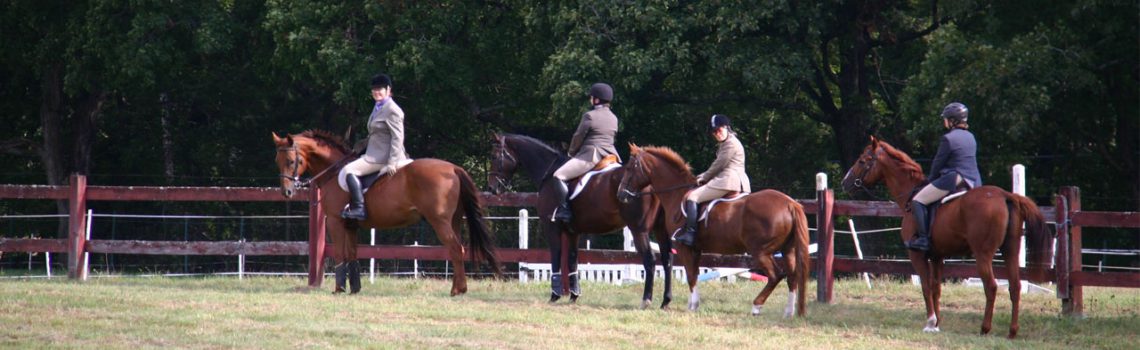
Wellington polo ponies injected with supplement

The Palm Beach Post reported today that the polo ponies that died in Wellington earlier in the week had all received an injection of the vitamin supplement Biodyl, a drug that is not approved in the U.S., and that team members believe a tainted dose caused their deaths.

Juan Martin Nero, captain of the Lechuza Caracas polo team, told the La Nacion newspaper of Buenos Aires that all of the horses had received Biodyl injections before the game.

“We don’t have any doubts about the origin of the problem,” Nero said. “There were five horses that weren’t given the vitamin and they are the only ones that are fine.”

Biodyl, a French-made supplement, is banned by the federal Food and Drug Administration and its sale or use in the United States is illegal, an FDA spokeswoman said.

If horses were injected with the supplement, “that would be illegal use of an unapproved drug,” FDA spokeswoman Siobhan DeLancey said.

Bioldyl is a French-made supplement that contains Vitamin B-12, selenium, potassium asparate and magnesium asparate. Last year, a shipment imported into the United States was rejected by FDA officials because it was deemed “a new animal drug which is unsafe,” FDA records show.

La Nacion reported that its use is not prohibited in Argentina, where the Venezuelan-owned team’s veterinarian and players are from.

This revelation still raises many questions. For one, Biodyl is routinely used in Europe as a vitamin/mineral supplement. The drug is intended to help horses recover more quickly from muscle fatigue. Unless the dosages were wrong or the product were tainted, it would be unlikely to cause problems. However, selenium administered in large doses can be toxic.

The Merck Veterinary Manual states:

Clinical signs are different from those of chronic selenosis and are characterized by abnormal behavior, respiratory difficulty, gastrointestinal upset, and sudden death. Abnormal posture and depression, anorexia, unsteady gait, diarrhea, colic, increased pulse and respiration rates, frothy nasal discharge, moist rales, and cyanosis may be noted.

Death usually follows within a few hours of consumption or injection. The major lesions are lung edema and congestion, and necrosis of multiple organs, including lung, liver, and kidney.

If the cause was the supplement, was it tainted? Or was the drug compounded in the US incorrectly rather than ordered from France? The initial necropsy reports on 8 of the horses revealed “nothing significant.

So, I guess we’ll need to wait for more detailed toxicology reports and hope to find out a definitive answer.

Diet can influence stereotypic behaviors in horses

Continuous foraging helps control stereotypic behaviors.

Continuous foraging helps control stereotypic behaviors.

Cribbing, weaving and other stereoptypic behaviors can be reduced through diet and stable management.

Recently I wrote about cribbing and how to help prevent it. Conventional wisdom has always been that frequent grazing and turnout can reduce cribbing behavior. Now a study conducted at the University of Bristol confirms that horses whose lifestyle approximates the natural grazing conditions of wild horses (nearly continuous eating of less nutrient-rich food) generally displayed quieter behavior and fewer steroptypic behaviors such as cribbing and weaving compared to horses fed infrequent, large and/or high starch meals. Researchers theorize that the more traditional diet may reduce digestive problems or blood sugar fluctuations.

This confirms it for me:  my horse will continue to get as much grass hay as he wants and enjoy his 24/7 turnout! It hasn’t completely stopped his cribbing and weaving but now I know my perception that diet and turnout has helped control his stereotypic behaviors is more than just my imagination.

Read more details about the study at The Horse, Link Between Equine Diet and Behavior Explored.

Polo Pony Tragedy in Wellington

By now just about everyone has read about the 21 polo ponies that died in Wellington, Fla. (some reports now have the death toll at 23).

The ponies, all members of the Lechuza Caracaus polo team, had been scheduled to play in a match on Sunday at the U.S. Open Polo Championship, a 105-year-old tournament that bills itself as the oldest such event in the United States, and which is considered to be the most prestigious in the nation. The remaining ponies on the Lechuza Caracaus team, those scheduled not to play, so far are still fine.

According to reports, the horses began to show signs of illness — breathing heavily and stumbling — at their stable, before they were brought to the polo club. Once they arrived, the horses appeared disoriented and dizzy, their lungs filled will fluid and they succumbed to cardiac arrest.Vets suspect a reaction to a toxin although it is unclear how they were exposed. Feed, bedding and supplements will be examined. Since there are no drug restrictions for polo ponies in the US (in Europe, anabolic steroid use is banned) veterinarians performing necropsies will also look for signs of  drugs — tainted or otherwise. To have so many horses from one team die so suddenly and virtually simultaneously while the remaining team horses remain healthy, makes it seem more likely that these horses might have been injected with a toxin. Results from the necropsies are expected by the end of the week.

Having watched my own horse go down with an undiagnosed illness last year I can’t imagine the heartbreak of seeing a team of polo ponies collapse and die. It must have been a heartbreaking scene.

Thanks for Reading!

Informative Blogger Award

Informative Blogger Award

I am always grateful to find that people read my blog.

To win an award is icing on the cake. To be recognized by Kim at Enlightened Horsemanship Through Touch is a great honor because I’ve learned so much from reading her posts that I’m flattered she finds mine to be informative.

In fact, I am constantly amazed by all the good information and amazing writing that is present now on the Web. I don’t know if it’s inspiration or competition, but equine bloggers sure keep the bar raised high!

Steffan Peters & Ravel Win the World Cup

The USA’s Steffen Peters and Ravel claimed the 2009 Rolex FEI World Cup Dressage title with an amazing Freestyle test. Peters, who was born in Germany but competes for the US, edged out Isabell Worth, who was a close second and Anky Van Grunsven who finished in third place. Peters was in second place up until the Freestyle portion of the event.

This was only the second time that the US has won a Dressage World Cup since the competition began 23 years ago. Debbie McDonald was the previous American Winner in 2003 with her mare Brentina.

The fact that Ravel (and presumably the other horses) could stay focused on their tests during the cheering and excitement of the crowd is amazing. There’s no excuse now for the rest of us to complain that our horses were distracted by events outside the ring.

Here are Steffen Peters and Ravel in both their Freestyle and Grand Prix tests. Enjoy!

Kentucky Derby Barbie Just Released

Mattel has introduced Kentucky Derby Barbie in conjunction with the 135th running of the race.

Mattel has introduced Kentucky Derby Barbie in conjunction with the 135th running of the race.

Break out the Mint Julips. Barbie is off to the races at Churchill Downs with the release of Kentucky Derby Barbie.

Dressed in a “playful” floral sundress, fake pearl necklace, “sassy” spring sandals, and, of course, a Derby-appropriate hat, Barbie is ready to place her bets. Let’s hope she gets some good tips!

For people who wish to resemble Barbie in her splendor, renowned milliner Christine Moore is creating up to 135 replica hats (human size) to commemorate the 135th running of the Kentucky Derby on May 2 and the Kentucky Derby Barbie’s arrival on the scene.

The first hat will be auctioned off through the Clothes Off Our Back Foundation. Proceeds will benefit Clothes Off Our Back’s charities. Remaining 134 hats will be available on a made-to-order basis on www.thederbystore.com.

Strange Dogs in the Paddock

Owners who let their dogs into the paddock with horses risk injury to their pets.

Owners who let their dogs into the paddock with horses risk injury to their pets.

A couple of weeks ago I was sitting in my car at the barn talking on the phone. While I was watching, a man walked down the street with a dog off leash. The dog — a Weimaraner — took off and ran through both paddocks, a streak of silver gray as she did several laps around the horses and then took off down the trail system.

Fast forward a week later and the same thing happened. This time I was in the barn so I walked out to talk to the dog’s owner. I asked him if he could please keep his dog out of the pastures with the horses. I explained that his dog could get hurt, or even killed, if one of the horses kicked it. In fact, years ago (before I moved there) a horse did kill a dog at this barn.

I also worried that one of the horses could be hurt if the dog chased them. I was particularly concerned because the paddocks were muddy and I could easily imagine a suspensory injury caused by one of the horses taking off suddenly in the mud.

I was shocked by his answer. He shrugged his shoulders and said, “I just can’t control her when she is off the leash.” Then he told me “you worry too much, nothing will happen.” I said that was fine but I would send him the bill if it did. Obviously this guy has never been on the receiving end of a vet bill for an injured horse. And somehow I doubt he would be so sanguine if his dog were to be injured by one of the horses.

I was floored by his lack of respect and his lack of concern. In the eight years that I’ve been at this barn I’ve come across other people who let their dogs run through the paddocks. Most of them simply didn’t understand the risks (either to their dogs or to our horses) and were apologetic. I’ve never run into anyone before who didn’t offer to keep their dogs on leash until they were beyond the paddock areas.

Unfortunately I live in a town with no leash law. So there is no way to make a dog owner responsible for the actions of its out-of-control canine. I learned when I was out riding a few years ago on the trails and encountered a dog walker who had about 10 dogs with them, the majority of them off leash. Several of these dogs charged me, barking aggressively at my horse. Luckily, the horse I was riding wasn’t afraid of dogs. I turned to face them and chased the dogs back to the walker (see What to do when you are chased by a dog). When I returned home I called the police department and they told me that with no leash law, there was nothing they could do since a dog hadn’t actually bit my horse. I wondered about other outcomes: what happened if a dog had caused my horse to bolt and I’d fallen off and been hurt, or if they had chased my horse out onto the road and it had been hit by a car.

I’m not anti-dog. In fact, I own two. My dogs are trained. I do let them off leash on the trails and I appreciate that we have the freedom to let them run and be dogs. But my dogs come when they are called and when they start to deviate from training standards they have a refresher course. Most of the dogs I encounter are well behaved and have responsible owners. I hate it when the few who are not ruin it for the rest of us.

Rennovation Funds for the Paragon Carousel are just a click away!

The Paragon Carousel

The Paragon Carousel needs your help. Visit www.partnersinpreservation.com to help it win a $100,000 restoration grant.

I’m a sucker for carousels. I spent so much time riding them as a child that I’m still always drawn to them. I’ve written before about the Flying Horses Carousel in Watch Hill, Rhode Island.

Today, there’s a carousel in need in Massachusetts. Located on Natasket Beach in the town of Hull, the Paragon Carousel is the last carousel in the Boston metropolitan area. It was the 85th out of 89 carousels created by the Philadelphia Toboggan Company, renowned maker of hand-carved carousels in the Philadelphia, or realistic, style and was built in 1928. It attracts more than 100,000 riders ever year.

Now the carousel needs the help of all carousel lovers. This local treasure is in desperate need of funding to restore the animals and the historic pavilion.

This is an awesome carousel. My daughter loves to ride it.

This is an awesome carousel. It's the last remnant of the Victorian Splendor of Paragon Park.

You can help. Casting your on-line vote for the carousel at www.partnersinpreservation.com can help the Carousel win a $100,000 grant for restoration. The Paragon Carousel is one of 25 Boston area historic sites chosen to compete for ten $100,000 grants. You can vote once a day and need only provide your email address (so, if you have more than one email address you can vote once a day for each one!). The competition for the grants runs through May 17.


Paragon Park when its roller coaster was still the tallest.

Paragon Park when its roller coaster was still the tallest.

While many of the carousels remaining are no longer in their original locations, the Paragon Carousel stands today only a few feet from where it was delivered in 1928.

Paragon Park was built  in 1905 by the Eastern Park Construction Company and run by George Dodge. It epitomized the Victorian era of Nantasket beach. Its 25 acres included towers, a medieval castle entrance, waving flags, pavilions, and lagoon, complete with gondolas rowed by authentic Venetian gondoliers,  all illuminated by brilliant neon and 100,000 electric lights whose reflection spilled gaily onto the sandy beach. David Stone and Albert Golden took over the park in 1920, and in 1928 they added one of the Philadelphia Toboggan Company’s last Grand Carousels. A carousel is considered to be “Grand” if it has at least three rows of horses and figures. The Paragon carousel has four. It is one of about 60 of the Grand Carousels remaining in the US.

A little about the Philadelphia Toboggan Company.

According to Wikipedia,

The Philadelphia Toboggan Company is the oldest existing roller coaster manufacturing company in the world. Based in Hatfield, Pennsylvania, it was established in 1904 by Henry Auchey and Chester Albright, making various amusement devices, including carousels, wooden roller coasters, and their trains. The company’s carousels were preferred among discriminating clients, for their elaborate carvings and elegant decorations. Among their lead carvers were Daniel Carl Muller, Leo Zoller, John Zalar and, most importantly, Frank Caretta. Fine examples of the company’s carousels (manufactured from 1904–1934) exist throughout the United States

Of the 89 carousels built by the Philadelphia Toboggan Company, 32 of their carousels are still in operation. At least nine carousels were destroyed by fire and many of the rest, especially the most elaborate ones, were disassembled, the horses sold off to collectors.

I used to covet a carousel horse and imagined it in my living room. Now, I’d rather see it restored and ridden so that kids today and tomorrow can experience the carousel where it is supposed to be: in an amusement park.