



Most of the horses I see lead pretty good lives. They work an hour or so 4-6 times per week and are pampered with supplements, massages, and cozy blankets. They have plenty to eat and are kept in plush accommodations.
There jobs may seem easy to us, who have to put up with work related stress to be able to afford our equine partners. But do horses also suffer from work-related burnout?
According to researchers at the University of Rennes, in France, the answer is yes.
According to this article in http://www.horsetalk.co.nz, by Neil Clarkson The findings indicated that horses face stresses in their daily life involving troublesome human bosses, difficult interpersonal relationships, undue negative reinforcement and poor rewards. When these negative experiences are linked to training, it can cause horses to “switch off” and become unresponsive an apathetic. The essentially suffer from work-related “burnout.”

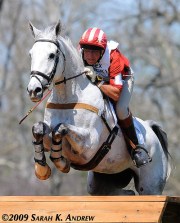
The researchers studied 76 French Saddlebred geldings, 6-15 years old, stabled at the Ecole Nationale d’Equitation in Sanur. The geldings were housed in the same conditions, spending 23 hours/day in their stalls. They were fed the same diet. The only difference was in the kind of discipline they performed each day for an hour. Horses were trained in one of three kinds of work.
- Jumping/eventing/advanced-riding-school.
- Dressage/high-school.
- Vaulting.
Of the 76 horses, 10 undertook eventing, 19 were show jumpers, seven worked in an advanced riding school, 17 performed dressage, 16 were high school and seven were used in vaulting.
Scientists monitored the horses for obsessive behaviors (stereotypies) such as head tossing, weaving, cribbing, and repetitive mouth movement. Sixty five of the 76 subjects performed some type of stereotypy.
- Valuting horses seemed the least stressed. They were the least prone to stereotypies and those who did display them showed only the mildest kind.
- Dressage/high school horses presented the highest incidence of stereotypies with several of them displaying two or more behaviors. They also gravitated toward more serious “vices” such as cribbing, windsucking and head shaking.
So, why is dressage so stressful? Researchers speculated that were several factors that contribute to both physical and interactional stress. And they didn’t even factor in Rollkur!
- The movements are physically constrained with many transitions that may increase the horse’s reactivity.
- Collected gaits may also be very physically demanding which may frustrate the horse.
- Restricted gaits are often obtained by restraining movement through the reins/bit while pushing the horse forward through the legs. These conflicting commands can be confusing to the horse and bit pressure and spurs can introduce averse stimulations.
- Postures are very ritualized and precise, so every movement is controlled by the rider.
Horses trained in jumping or eventing have a freer way of going that is less ritualized. These horses showed some stereotypies, but milder ones such as repetitive licking. Researchers acknowledged that some of the behaviors could be a reaction to the conditions in which they were kept (stalled for so many hours a day).


Vaulting horses appeared the least prone to perform stereotypies and these were restricted mainly to tongue play. Vaulting horses had been chosen for their quiet temperament and spent their work time turning in circles, with voice orders. Researchers felt that their jobs put them into minimal conflict with their human trainers and the demands on them were limited to keeping regular, slow paces.
Now, I have to say that I’ve seen some very calm and relaxed upper level dressage horses and some completely wired and obsessive jumper/eventers. A lot, in my opinion, would be influenced by training styles, the horse’s natural athletic suitability for its discipline and their environment.
But, if I were given the choice to be reincarnated as a horse, I’d probably want to be an eventer, even it is more stressful than being a vaulting horse. I like the fact that eventing horses and jumpers have a degree of autonomy that the other disciplines don’t offer. I think that perpetually going in circles would be mind numbing rather than relaxing. I do think I’d pass on being an upper level dressage horse. I’m not temperamentally suited to that level of precision and accuracy.