


Most people think that snaffles are the mildest bits. for example, you see horses advertised with a “snaffle mouth.” The implication is that these horses have sensitive mouths and don’t require a lot of bit to control them.
In truth, a snaffle is any bit with a solid or jointed mouthpiece that has no leverage; the reins attach directly to the the mouthpiece and the pressure and signal from the rider’s hands is direct.
If you compete in dressage, you are limited to the mildest forms of snaffle bits; show hunters almost all show in a snaffle (because it makes the horse look easy to ride, but anything can be inside the horse’s mouth.
But it isn’t always mild. Take a look at some of these. Twisted wire, segunda, waterford . . . these mouthpieces all have varying degrees of severity and there are plenty more like them. Snaffles apply pressure to the lips, bars of the mouth and, most of all the tongue.


How many joints?
This may age me, but when I started riding, most snaffles had a single joint, like the one below. In fact, I’ve owned this particular bit for at least 20 years, maybe longer.
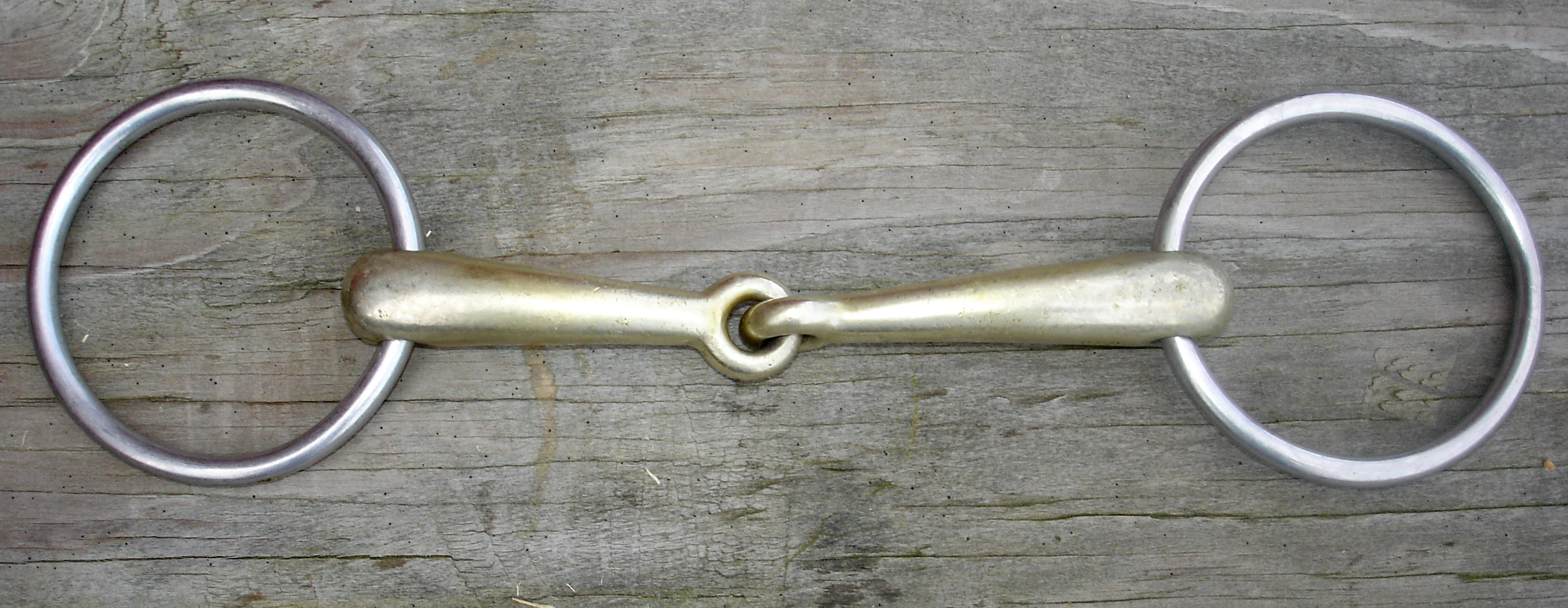
The potential problem with the single jointed design is that when pressure is applied by the reins, the bit essentially folds up in the horse’s mouth. Some horses, especially those with a low palate, find this uncomfortable. The double jointed designs that were introduced some years back are designed to make the bit drape over the horse’s tongue. You can see the difference between the two types of bits below.

However, just because the double jointed bit looks like it will be more comfortable, not every horse has read the manual. Freedom hates double jointed bits but is happy as a clam in my old single jointed snaffle. Go figure!