
There’s something very satisfying about putting a load of hay in your loft as winter approaches. Here in New England, the difficulty of getting hay delivered once snow starts to fall can be anxiety provoking, to say the least. Forage should be the basis of your feeding regime, so getting an adequate supply of good quality hay is essential.
However, it’s important to remember that the quality of your hay matters just as much as the quantity. Hay that is stored properly retains more of its nutritional value, stays palatable, and helps reduce unnecessary waste. On the other hand, poor storage conditions can lead to mold, dust, nutrient loss, and spoiled bales that animals may refuse to eat.
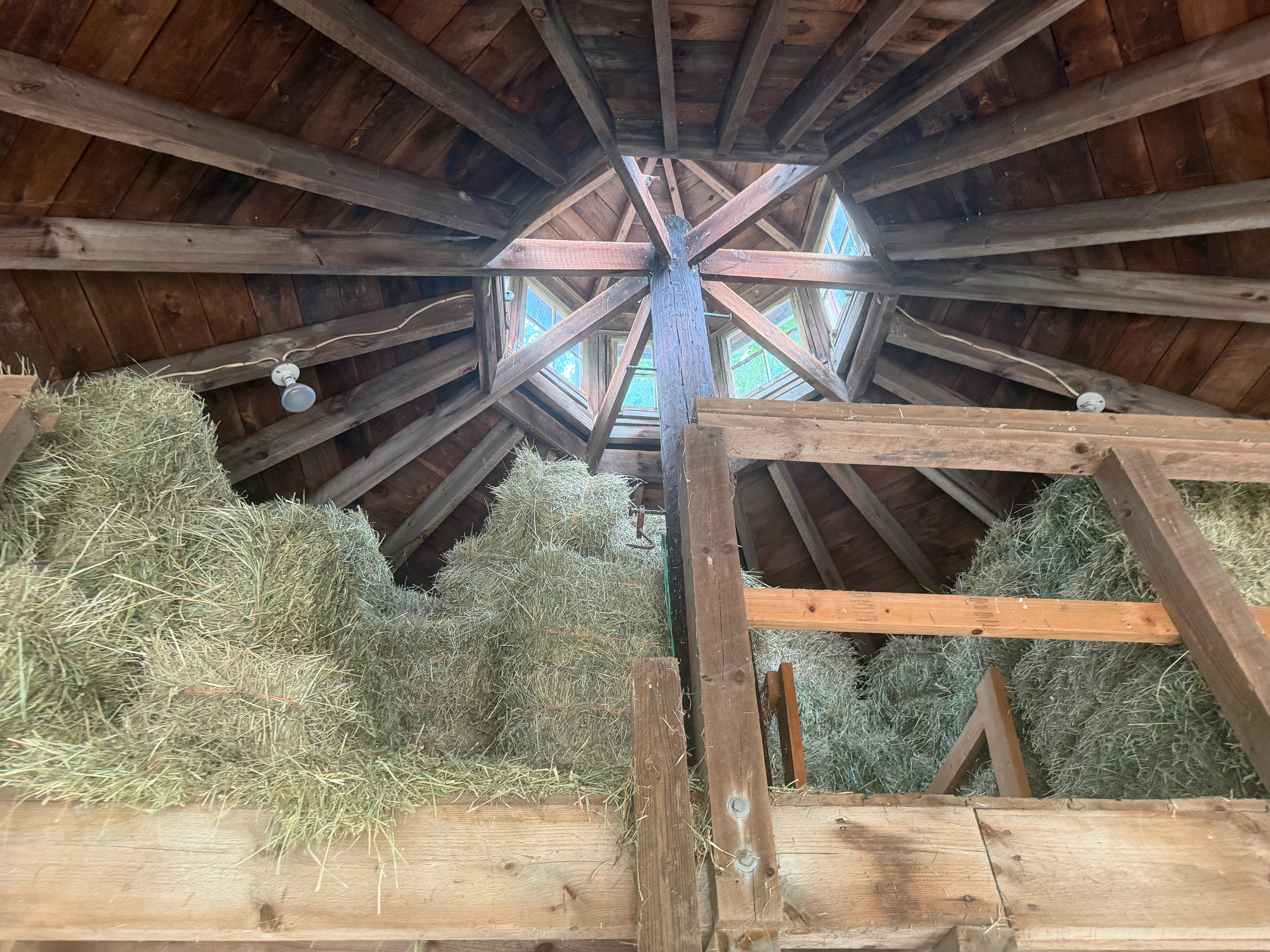
In this guest post (with a few asides from me) from Farmers Direct Hay & Feed, you will learn how to store your hay in the best way to preserve it.
According to Penn State Extension, proper hay storage not only helps reduce spoilage and preserve forage quality but also improves safety when handling and storing large bales. Keeping hay dry and well-ventilated is one of the most effective ways to maintain its nutritional value throughout the year.
Store Hay in a Dry, Well-Ventilated Area
Moisture is one of the biggest threats to hay quality. Rain, humidity, and poor airflow can encourage mold growth and reduce the nutritional value of the forage.
Whenever possible, store hay inside a barn, shed, or covered structure that allows for good ventilation. Air circulation helps prevent moisture from becoming trapped between bales, especially during humid seasons.
If indoor storage isn’t available, cover outdoor stacks with breathable hay tarps rather than plastic sheeting that traps condensation.
Keep Bales Off the Ground
Hay stored directly on soil or concrete can absorb moisture from below.
Using wooden pallets, gravel bases, or other raised platforms creates airflow underneath the stack and helps keep the bottom layer dry. Even a few inches of separation from the ground can reduce spoilage and extend storage life. Luckily, there are many places that will give you pallets for free. Check out garden centers, hardware stores and even supermarkets.
Stack Hay Carefully
Proper stacking improves stability while encouraging airflow.
Leave small gaps between stacks when possible and avoid packing bales too tightly against walls. This allows moisture to escape and makes it easier to inspect for any developing issues.
If you’re storing multiple types or cutting dates of hay, clearly label each stack so older inventory is fed first.
Monitor Temperature After Baling
Freshly baled hay naturally produces heat as it finishes curing. However, excessive moisture can cause temperatures to rise to dangerous levels.
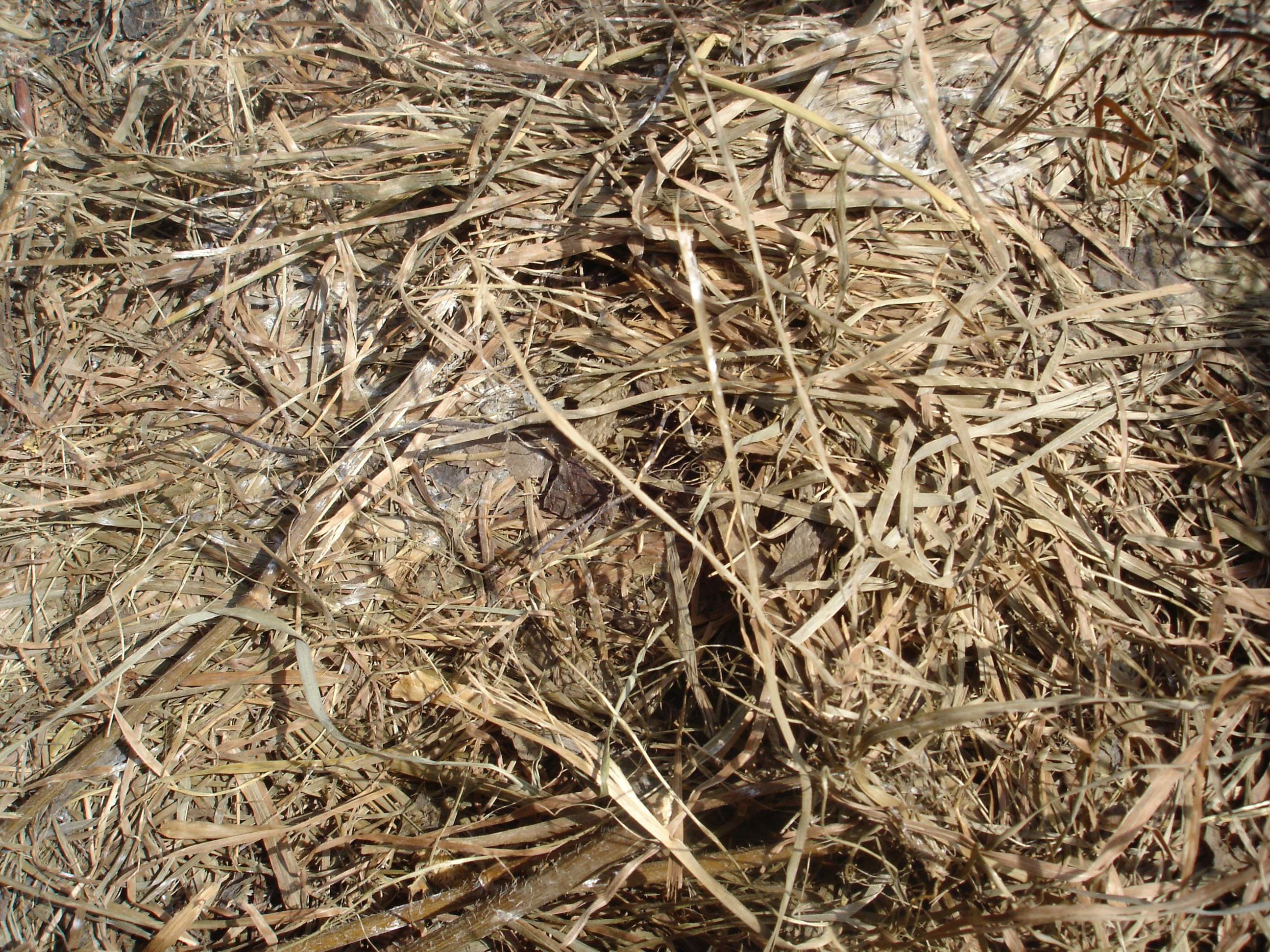
For newly baled hay, check internal bale temperatures during the first few weeks of storage. If temperatures become unusually high, consult your local extension office or fire department for guidance, as overheated hay can present a fire risk.
Watch for Signs of Spoilage
Before feeding, take a quick look at each bale.
Healthy hay should generally be:
- Green to light green in color
- Pleasant, fresh smelling
- Free from visible mold
- Low in dust
- Free of foreign objects or weeds
If hay smells musty, feels damp, or shows mold growth, it should not be fed to horses, as moldy hay may contribute to respiratory and digestive problems.
Start With High-Quality Hay
Proper storage begins long before hay reaches your barn. Hay that has been harvested at the correct stage of maturity, cured properly, and handled carefully is more likely to maintain its nutritional value during storage.
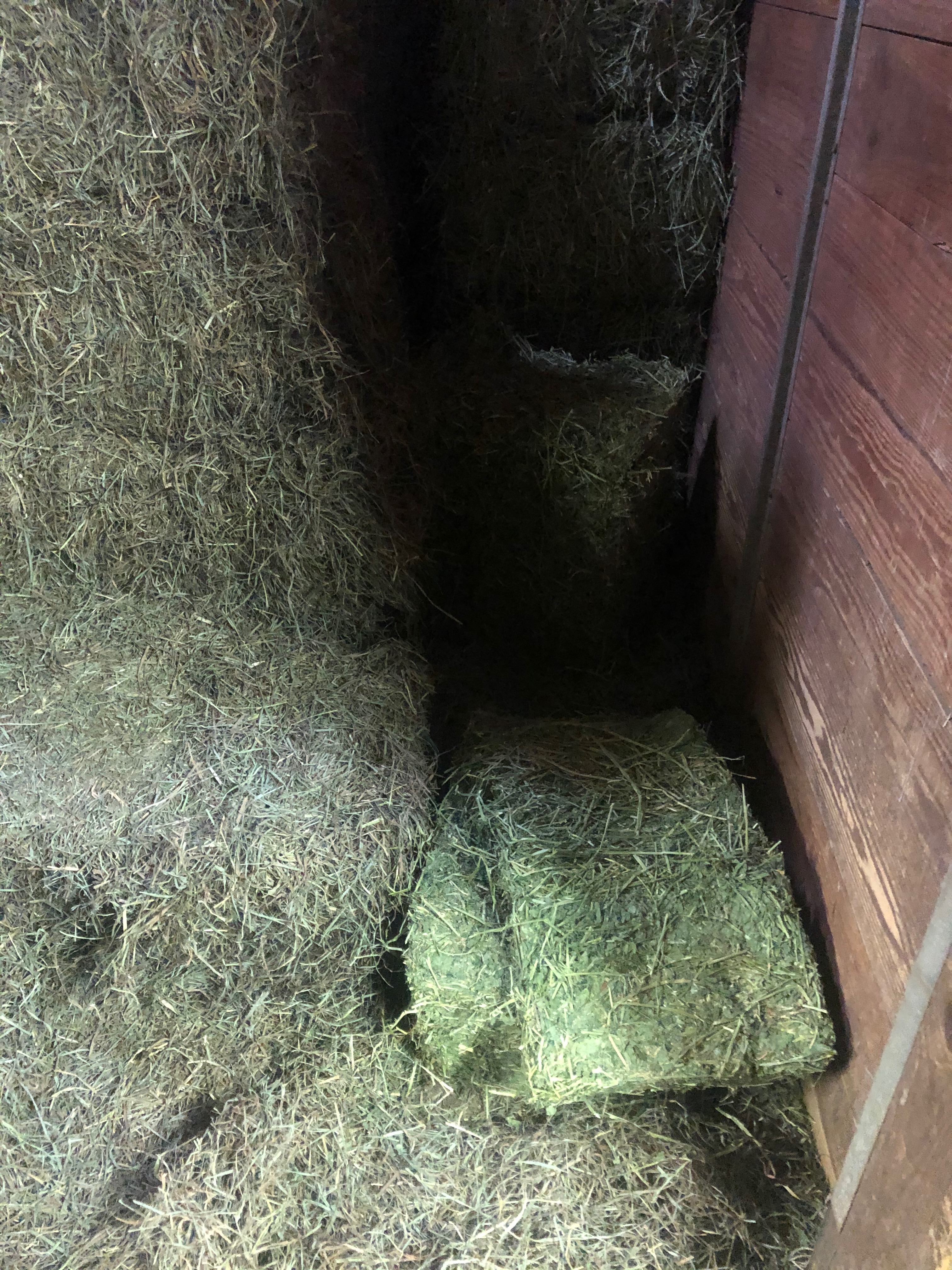
Many horse owners and livestock producers prefer purchasing from a premium alfalfa supplier that focuses on consistent harvesting practices, proper curing, and quality control. Starting with high-quality forage gives you the best opportunity to preserve nutrients and reduce waste over time.
Personally, I buy from a third-generation farm that is local to me and which has always excellent hay. Some suppliers will also offer a nutritional profile. When Zelda had laminitis it was critical to feed hay that had and NSC level below 9%. Only one supplier in my area offers hay with that profile.
Rotate Your Inventory
A simple first-in, first-out system helps ensure older hay is used before newer deliveries.
Keeping stacks organized also makes it easier to monitor inventory, identify damaged bales, and reduce unnecessary waste.
Match the Hay to Your Animals’ Needs
Not every bale is ideal for every animal. Factors such as age, activity level, and nutritional requirements all influence the type of forage that’s most appropriate.
For example, horses with higher energy demands, growing animals, or breeding stock may benefit from ultra premium alfalfa, while others may do well on high-quality grass hay. Consult your veterinarian or equine nutritionist to determine the best forage for your specific horses.
Also keep in mind that if you feed round bales to horses, it’s important to have them vaccinated against botulism. Large round bales pose a high risk for equine botulism because their dense centers retain moisture, creating an oxygen-free environment where Clostridium botulinum bacteria thrive and produce deadly neurotoxins. That’s not necessary when feeding square bales.
Inspect Hay Regularly
Even properly stored hay deserves occasional inspection.
Look for:
- Water leaks in the storage area
- Rodent or bird damage
- Signs of insects
- Mold or discoloration
- Shifting stacks that may become unstable
Catching small issues early helps prevent larger losses later in the season but it’s always better to throw away hay that is moldy, excessively dusty, or damaged.
Final Thoughts
Keeping hay fresh isn’t complicated, but it does require consistent attention. Protecting hay from moisture, allowing adequate airflow, storing it correctly, and routinely inspecting your inventory all help preserve the nutrients your animals depend on.
Starting with quality hay and following good storage practices helps maximize the value of every bale while ensuring your horses and livestock receive clean, nutritious forage throughout the year.
Reference
Penn State Extension. Safely Moving and Storing Large Hay Bales.
https://extension.psu.edu/safely-moving-and-storing-large-hay-bales
When I brough
I wish I’d read this 20 years ago when I brought my arab gelding home to my own property. I had no barn to store the ton…yes, a TON of grass hay. So I did everything wrong…stacked it tightly against my garage, I DID have it on pallets, but covered the hay with a blue tarp. I live in the Pacific Northwest where it rains for seven months of the year.
As you can imagine, it got wet, moldy, exuded gray mildew powder and mold, provided a home for rodents. About the only good thing was my Siamese thought it a grand staircase to get atop the garage roof where she could see for miles and told us about the view!
I do have to say that that moldy rotten hay DID provide one good thing. Before I’d bought the property, a bulldozer had dug a trench to serve as a fire break, as we get wildfires here. I filled that trench up with hay to level it out, and now you’d never know it had been a deep trench. But boy…it was an expensive lesson to learn.
I once bought hay off the field from a local farmer. It was not baled dry enough and it all got moldy. I was able to get the town farmer to remove it to feed to cows and replace it with better hay. That was back when hay was $4/bale and it was still an expensive lesson. These days, hay is more like $9/bale.
Things are better for the moment: re: hay prices. Traditional rectangular bales, running ~70 lbs, is going for anywhere between 7 and 10 dollars. The big 550 lb round bales are going for 30-45. Species are all over the map: timothy, grass or so called ‘orchard’ hay, alfalfa which has always been very dear, and now stuff called ‘teff’. The latter is said to be good for diabetic horses or ones said to be ‘allergic’ to our local grass hay.
Last year hay was so scarce, due to our wildfires, that alfalfa was going for 45 a ‘square’ bale.
But I suspect that the really primo hay that comes from E. Washington is going to be high. The wildfires in E. Washington, especially the arson caused ones near Spokane, have hit the hay men hard.
The tip about wooden pallets is so practical; we raised our stack off the concrete floor last winter and the difference in the bottom bales was night and day. Labelling stacks by cutting date is another good habit we have adopted, since it really does make the first-in first-out rotation easier. Wishing your loft stays full and dry this season. Best, YearstoHuman