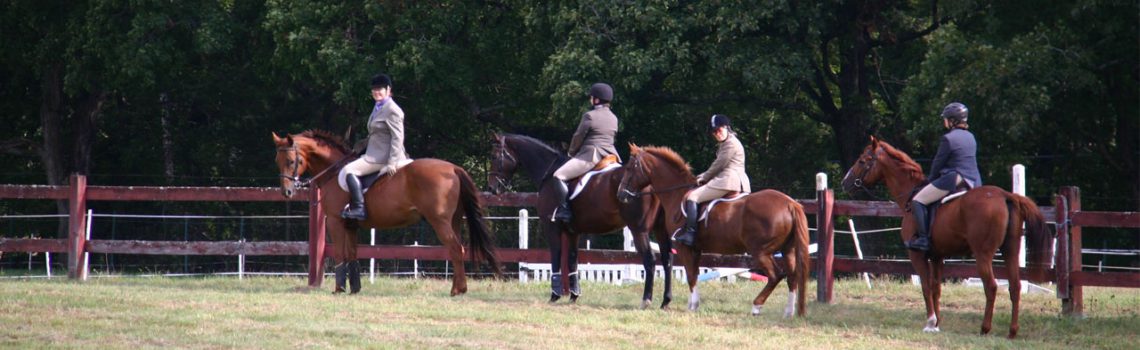
A kiss on the head.

Photo by pamela leigh richards, 12/08

I had a mare once who loved all baby creatures. She would lean down and snuffle my daughter’s head just like this.

One day I found her in the paddock with a gosling. She followed it around gently brushing it with her muzzle and breathing into his feathers. It looked like she was trying to soothe it (although I’m not sure the gosling got the message).

More cute photos and videos like this at Fly With Me Productions. Check it out!

The importance of touching your horse.

Gary Severson was the first person to show me how bodywork can be used to release tension.

Last week I read a post at Enlightened Horsemanship Through Touch that really struck home, Routine Tasks with no Inherent Meaning Diminish the Spirit of the Horse.

There’s a lot in the post that I agree with. But it was this paragraph that really resonated with me. It refers to how we can motivate our horses by touching them more:

Another way is to increase the amount of physical contact we have with our horses. Not the kind with the whip or with the leg. The kind where you both are on the ground and your hands are on the horse. Touch is a miracle communicator because horses are sensory creatures. Like us, touch in equine life is an important part of the establishment of social hierarchies and family interaction. The reward of human touch is powerful for such tactile animals. You’ve seen a horse with a metaphorical sign reading, “will work for food,” but most of them also will work for touch.

Over the past two or three years I’ve come to believe strongly in the positive effect of touch. It started by watching my saddle fitter, Gary Severson, work on my horses. There have been times when my horse would flinch over his loin, or get a bit girthy, even though I knew my saddles fit. Gary showed me a few techniques to release that tension and I was hooked.

I searched the Internet and found Jim Masterson’s instructional DVD and a few articles on his techniques. This was what I was looking for — clearly illustrated instructions that helped me understand how to help my horse myself on an as-needed basis.

I started to give my horses massages — first using massage tools and then learning how to use my hands to release tension. Okay, I’m not a professional massage therapist and I’m sure I’m nowhere near as effective, but I have the advantage of being able to massage frequently and to feel how my horses’ bodies react to massage and are changed by it. Your hands give you a direct connection to your horse’s muscles so that you can feel exactly where he might be holding pain or tension. The signs are sometimes subtle and would be missed during a regular grooming.

Kroni loved being massaged

Kroni loved being massaged and he liked you to go deep into his muscles.

My Trakehner, Kroni, loved being massaged. He made the most incredible faces! Sometimes he would lean into me so hard I thought he’d fall over if I stopped (that massage sure feels good).

Freedom, my TB, is much more sensitive. While he holds a lot of tension, he is also very reactive and at least at first, could tolerate only the lightest touch. When I tried to work with him he’d dance around, try to nip me and otherwise be uncooperative. It took me a long time to figure out how to touch him in ways that were calming. When Kroni died, I spent a lot of time working with him on the ground, sometimes just putting my hands on his body to settle him, sometimes using accupressure points that are known for calming (the calming power of touch).

I believe that through this regime of bodywork and touching, I have been able to soothe both his body and his mind.

Interestingly, I don’t know that many people who use touch (at least consciously) as part of the way they care for their horses. I posted a poll recently on the Chronicle of the Horse Forum that asked people:

How often do you incorporate massage/touch into your grooming routine? Forty-one people responded:

  • 41.46% (17) reported they groomed horse thoroughly but don’t specifically use massage techniques.
  • 19.51% (8) reported that their horse gets regular massages from a professional.
  • 17.07% (7) answered that they incorporate massage into their daily routine.
  • 29.25% (12) said they give their horse a massage themselves periodically.
  • 14.63% (6) reported that massage is not part of their horse’s care.

This data is pretty consistent compared to the people I know. Most give their horses thorough grooming. It’s clear to me when I groom my own horse that some release of tension occurs when you groom, especially when you get those itchy spots where your horse leans into the currying motion. Okay, so I’m a recent convert and probably am still in the zealot stage, but with my horses I have not been able to get the same effects from grooming as I can when I touch my horses with my hands.

Equine bodyworkers that I’ve encountered talk about sharing energy with the horse when they work. I’m not sure that I’d say that — yet — but there is definitely a greater connection, which has a more positive impact, when your touch is not blocked by a curry comb or a brush.

How to give your horse oral medications.

Dosing your horse with a syringe is an effective way to administer oral meds.

Dosing your horse with a syringe is an effective way to administer oral meds.

Giving a horse medications is not always as easy as mixing a powder into its feed. Sometimes you need to administer them orally using a syringe.

Of course, squirting a paste into a resisting 1200 pound animal can be a source of great amusement for those watching and frustration for those administering. Here are some tips that can help you succeed.

  • Practice before you need to make it count. When you give meds “for real” you can’t have them spit half the dose on the ground. It’s a good idea to do a trial run or two using a pleasant tasting substance (like apple sauce) in the syringe.
  • If you are right handed, stand on the right side of the horse, facing in the same direction as the horse and holding the syringe in your right hand.
  • Once the syringe is loaded, relax your horse by stroking his head and massaging his neck
  • Once your horse is calm and relaxed, put your finger in the corner of his mouth and massage gently.
  • Next, place the tip of the syringe in the corner of your horse’s mouth.
  • Raise your horse’s head slightly
  • Move the syringe tip around to stimulate movement of the tongue.
  • And inject the apple sauce or medication.

Tips for success

  • You can make a palatable paste out of many types of pills or powders by mixing them with either applesauce, molasses, or Kool-Aid
  • Cross tie your horse or have someone hold him using a lead rope. Some vets suggest giving oral meds in the horse’s stall where they are more confined.
  • Make sure that if your horse spits some of the medication out, that you adjust the dosage and that you clean it up. Some medications, such as Ivermectin de-wormer, can be toxic to certain breeds of dogs.

Would you hang up your bridle?

I found this poem online a few days ago and wanted to share it with all of you.

I Hung up my Bridle Today
by Kris Garrett

Yesterday, for the first time, I was too tired to ride
Yesterday, for the first time, I was afraid I would be hurt if I was thrown
Yesterday, for the first time, I heard someone say my barn was too shabby
Yesterday, for the first time, I let someone tell me I was too pudgy to ride
Yesterday, for the first time, I realized I was old
Yesterday, for the first time, I had to face that I could no longer keep up
Yesterday, for the first time, I had to let go of my dreams
Yesterday, for the first time, I felt my heart break
Yesterday, for the first time, I turned my back on my friend
Yesterday, for the first time, I knew I was done

Today, for the last time, I felt warm, braided leather in my hands.
Today, for the last time, I ran my stirrups up so they wouldn’t bang my mare’s sides
Today, for the last time, I released the buckles on the girth and watched my girl sigh
Today, for the last time, I slowly dropped the bit so it wouldn’t hit her teeth
Today, for the last time, I gave my mare a cookie to thank her for the ride
Today, for the last time, I buried my head in her soft, warm neck
Today, for the last time, I inhaled the sun and the dust in her long winter coat
Today, for the last time, I closed the gate and trudged to the muddy porch
Today, for the last time, I tracked hay and horse hair into my house
Today, for the last time, I pulled off my boots and felt the sting of warm blood returning to my cold toes

Today, for the first time, I cried after my ride
Today, for the first time, I felt my hands shake as I set the saddle on its rack
Today, for the first time, I hugged my young trainer a final goodbye
Today, for the first time, I waited for the new owner’s trailer to arrive
Today, for the first time, I set my boots in a box to go to the Goodwill
Today, for the first time, I sighed at the wear on my riding gloves
Today, for the first time, I had no hay in my hair
Today, for the first time, I did not hear nickering when I opened my back door
Today, for the first time, I felt worse leaving the barn that I did when I entered
Today, for the first time, I had no one to check on before going to bed

Tomorrow, for the first time, I won’t have to buy hay
Tomorrow, for the first time, I can stay in bed longer
Tomorrow, for the first time, I won’t see the poop pile grow
Tomorrow, for the first time, I won’t be able to fly on four legs
Tomorrow, for the first time, I will be sorry I listened
Tomorrow, for the first time, I will regret letting her go
Tomorrow, for the first time, I will be angry at God
Tomorrow, for the first time, I will be angry at myself
Tomorrow, for the first time, I will cry the day away
Tomorrow, for the first time, I will be glad to die

Day after tomorrow, for the first time, I will awaken in tears
Day after tomorrow, for the first time, I will know I was wrong
Day after tomorrow, for the first time, I will defy all the judgment
Day after tomorrow, for the first time, I will ignore my old bones
Day after tomorrow, for the first time, I will return the buyer’s check
Day after tomorrow, for the first time, I will bring my friend home
Day after tomorrow, for the first time, I will take my boots out of the box
Day after tomorrow, for the first time, I will be reborn

For the rest of my life, I will have a horse in my yard
For the rest of my life, I will ignore the cruel judging
For the rest of my life, I will watch the poop pile grow
For the rest of my life, I will have hay in my hair
For the rest of my life, I will track mud in my house
For the rest of my life, I will bury my face in her soft neck
For the rest of my life, I will let my soul fly
For the rest of my life, I will never be alone

More equine body art – clipping and quarter marks.

While most of us are still struggling with keeping the lines straight, there are some real body clipping artists out there.

I’ve found a few more examples to inspire. The good news is, if you make a mistake you can just take it all off. The person who did this said they were done free hand, without a pattern. Wow!

I'm impressed. I'd have to practice for years before I'd even attempt this.

I might try this . . . as long as I can shave off the mistakes afterward.

Quarter marks as equine body art

This Superman Quarter Mark is part of a stencil set.

Not brave enough to go free hand? No problem! There are a number of stencils available to help make your pattern (almost) fool proof.  In fact, if you don’t want to clip a pattern into a horse’s coat, you can also brush one in.

Quarter marks are the patterns that are brushed or clipped into your horse’s hind quarters. Generally seen at dressage competions or events, traditional patterns include diamonds and checkerboards but you can also get stencils to help you make more complicated shapes.

The technique for making quarter marks is simple. Perfecting them takes time and practice.

  • Start with a clean horse.
  • Spray the hindquarters before you start combing. Some people use water; but the pattern will hold better if you mix in some hair spray, fly spray or something similar.
  • Brush the hair on the hind quarters toward the tail with a stiff body brush.
  • Take a fine toothed comb, cut to the size of the pattern you want to make downward through the damp hair to make the marks.
  • To make a Sharks teeth pattern, brush the hair downward with a body brush then do sweeping movements toward the tail to create the effect.
  • If you use a stencil, place it on your horse. Then take a clean, stiff brush and brush the hair straight up.
  • Without moving the stencil, brush the hair backward against the way it naturally lies.
  • Remove the stencil and spritz with spray gel again to “set” the mark.
  • Finish up by brushing down all the hairs away from the stencil so it doesn’t look framed.

Video demonstration:

Is Scribbles the oldest pony in England?

Scribbles, who is 51, shares a carrot with Charlotte, 3, and Maddie, 6. Photo: BBC.co.uk

Scribbles is going for the World record. His owners believe him to be 51 years old, and that potentially makes him the oldest living pony in England and maybe even in the world

Until 2002 Scribbles had worked at Strawberry Gardens Riding School in Camborne for 24 years after owner Jill Power paid £125 for him in 1978, as an already “long in the tooth” 20 year old.Until 2002 Scribbles had worked at Strawberry Gardens Riding School in Camborne for 24 years after owner Jill Power paid £125 for him in 1978, as an already “long in the tooth” 20 year old.

Scribbles takes a jump

Scribbles takes a small jump 30-plus years ago!

Current owner Alison Eathorne took him home to Cornwall to live out his retirement years in 2002. Now he’s the boss of two young girls and a handful of ponies.

What keeps Scribbles acting so young? Maybe he just enjoys his role as school master to Maddie (age 6) and Charlotte (age 3). Certainly this 11-hand part Shetland pony has taught a lot of kids to ride and seems to thrive in the role.

Alison Eathorne attributes his good health to the special Spillers senior feed he eats,vitamins and cod liver oil. Amazingly, the pony is fed no supplements or medications

Scribbles the oldest pony in the world

Scribbles takes good care of his young charges and they reciprocate. Photo: bbc.co.uk

(athough he has lost most of his teeth).

Or maybe it’s the carrots that he shares with his young riders.

Whatever the cause of his good health, it’s really nice to see that a pony his age is so well cared for and so loved. The Eathornes are doing a great job. That pony sure looks happy, healthy and appreciated.

A month into the barefoot experience it’s going well

It’s been a month since I had Freedom’s shoes pulled (the great barefoot experience is underway). I had expected the worst: a horse that was too footsore to ride; the loss of an entire hunt season; hooves that chipped; and bruising or abscessing.

When I had to take Kroni’s front shoes off he was miserable. He walked on eggshells for the first two weeks. Eventually I had to put him hoof boots and Thinline pads 24/7 to get him through the transition.

It just goes to show that the more you think you know, the more horses surprise you. Freedom hasn’t taken a bad step yet. My farrier had recommended that I pull his shoes while the ground was still soft to help ease him through the transition and he walked off sound right from the get go. The Cavallo Hoof Boots that I bought continue to work great for work and best of all, his hooves are looking really good.

After spending the past few months making sacrafices to the hoof gods to keep his shoes on, I am revelling in all the benefits that his shoeless state has brought to me.

  • When I get to the barn and I don’t have to check his feet first thing to see if he’s wearing all his shoes!
  • I no longer listen for the clink of a loose shoe with a sinking heart.
  • I don’t worry about him damaging his hoof by pulling a shoe.
  • He doesn’t have to wear bell boots any more (which held moisture).
  • I don’t have to coax my farrier back in between visits to fix  a loose shoe or to re-attach a missing one.
  • I don’t have to look for lost shoes in the paddock.
  • He’s already set for winter — no borium or rim pads!
  • And, most important — he looks comfortable and happy.