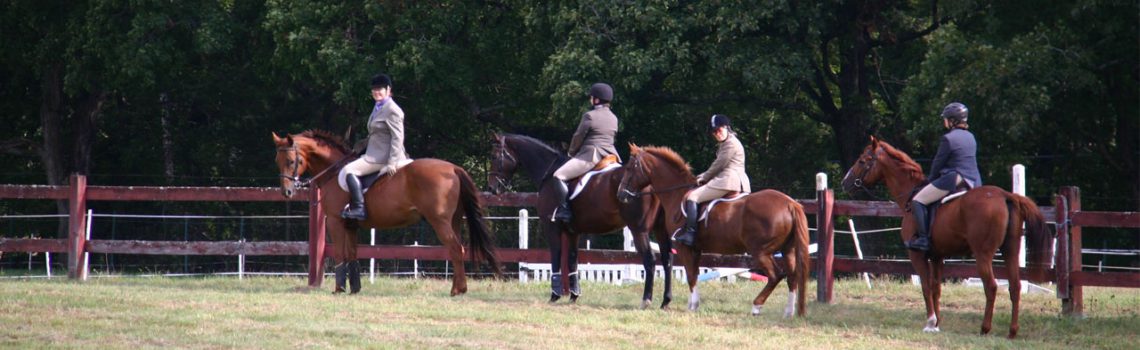

Cue the music. While not a Neil Sedaka fan, I will agree that breaking up is hard to do. Even when it’s with a horse. This spring I decided that Finn was not the right horse for me. It wasn’t an easy decision. I’d brought him home leaning into his potential. This lovely young horse was underweight, hadn’t been ridden in about a year, and needed a home. I needed a horse to nurture and love. I had a lot of confidence in my ability to work with OTTBs — Finn was my fifth and he’d already been restarted. What could go wrong?
The answer was plenty.
Buying a horse is always a leap of faith, a gamble, a dream. Your horse is a partner with whom you plan to have great adventures whether they be showing, foxhunting or trail riding. Unfortunately, that dream doesn’t always pan out. Sometime it’s because a horse doesn’t excel at the discipline you want to pursue — it can’t jump high enough, run fast enough, isn’t brave enough, doesn’t have the right movement, is too spirited, too spooky. The list goes on.
Sometimes you can make it work. You might change your goals to correspond with your new horse’s talents or send your horse for professional training. Sometimes, you just have to admit the fit isn’t there. Years ago I got a young racehorse off the track who had a congenital stifle issue. The vet said it might get better with time and strengthening. It didn’t, so I sold him to someone who wanted to trail ride. I also had a TB mare who, it turned out, had no aptitude for jumping. I sold her to a woman who wanted to pursue dressage. The rest of my horses I’ve kept. Sometimes adjusting my goals — Kroni, for example, didn’t want to be an event horse, partially because he had such a small mouth and large tongue that bits were uncomfortable, but he turned out to be the best foxhunter.
Horses are expensive. There’s no way around that. So, when you have a horse that you don’t enjoy, how much responsibility do you have for finding them the right next home? Sometimes it’s not that hard. If the horse is a solid citizen that simply doesn’t excel in the discipline you want to pursue, you can find them another home. But, if the horse has a soundness issue or behavioral quirks, what do you do? Freedom is happily retired in Virginia and is now 26. He could live several more years and I’m happy to fund them. But what about the 8-year old horse? Will he or she be on your payroll for a decade or more? For the horse with issues, their long-term prognosis is not good. They can end up making the round of low-end auctions, or even worse, shipped to Mexico.
With Finn, I will admit to being part of the problem. He was big, beautiful and a fancy mover. He was not in good shape when I went to see him and his owner’s illness put him at jeopardy. I wanted to save him as a way of making up for my inability to save Zelda. I went into the situation with stars in my eyes and without really looking at the horse in front of me or taking into consideration my own limitations — namely, I’m a lot older than the last time I restarted an OTTB and I’ve had a few injuries that have left me less willing to ride through behavioral problems.
When I stopped looking forward to working with him, when I started to worry that he would hurt me, I decided to throw in the towel. I’d invested a year into his rehab and he looked great. But I didn’t feel comfortable pushing him through his resistances and the pro I’d worked with last year didn’t have time to school him. She offered to put me in touch with a young rider (20s) who was good with TBs. However, the first thought that ran through my mind was, what if he hurt her? I didn’t want to expose a non-professional, especially a young one, to a situation where she might get hurt.

Then I thought about selling him. How could I sell him to someone when I couldn’t even get him to long line without rearing?
So, I wrote to his previous owner and offered to send him back. I knew how much she cared for him and I wanted to give her the chance to find him a more suitable home.
That didn’t go well, to say the least.
Somewhat predictably (I might have had some of the same thoughts had I heard from a buyer experiencing problems with a horse a year down the road), she was angry. She was crying. Her horse had never behaved the way I described. What had I done to him? She had sold him to me because he would have a home with someone who would appreciate him and give him a job. And no, she wasn’t in the position to take him back.
Well, okay. I went back to the video taken the day I tried him and could see the same problems, now exacerbated because Finn was well fed, muscled up and feeling strong. Thirty years ago, twenty years ago, I would probably have put my big girl pants on, strapped on spurs and ridden him through it. I’d had horses in my past who required remedial training. But my 64-year old self didn’t feel up to it.
I considered sending Finn for professional training and went so far as to get recommendations. Would 60 days of pro rides give me the partner I wanted? Or would I have invested a few thousand more dollars into a horse that wasn’t going to work for me? Maybe at the end of it, I would have a horse that I could sell. I also thought about doing a complete physical evaluation to see if there was an underlying pain issue that was causing his behavior.
When Rosie’s owners expressed interest in him, I was delighted. They are professional trainers. I could be completely up front with my issues. I showed them video of him and then when they delivered Rosie, they saw first hand what he did and did not do. They would put him in a training program and felt pretty sure that he could be fixed. Most importantly, he did not intimidate them.
So far, it’s worked out great. He’s being ridden almost daily. Yes, he can be lazy and stubborn. Yes, he has days when the bushes are filled with mountain lions and other scary beasts. Yes, he hates leading a trail ride. But, he’s doing everything he’s asked (with some incentives) and has shown an aptitude for jumping. I guess that, in the end, I accomplished what I’d hoped for him: he’s healthy and on his way to being a horse that someone will enjoy and cherish.
How have you dealt with the horses that didn’t work for you?
Hello, Liz, Oh, YES, I had a horse that didn’t work out for me. I finally was in a position where I could afford a horse. I was at Ft. Bragg, NC. No car, by the way. The post boarding stable had signs up for Horses for Sale there…and McDuff was on it. “Grade” buckskin gelding, (QH type), no papers, 12years old.
I bought him. He was severely overweight and lazy.. He knew immediately I was a very green rider, although I did have experience handling horses. He had a vice I was able to cure, that of pulling while tied, but he had another that I found out later, the hard way. About three or four months after I bought him, I was trail riding with a friend…and he carefully planned on where he knew a low spot in the trail where he could get his fore end down lower than his back. When he hit it, he bucked me off, right over his head. I landed on rocks on my back, spraining it, and he ran back to the barn. My friend offered me a seat behind her on her reliable mare but I was in such painI couldn’t do it. I walked two miles back to the barn. Some kind soul had unsaddled McDuff and put him up. His vice was not just laziness but barn sour,…and just plain ornery.
It didn’t hurt my feelings in the slightest to sell him on.
THe people who say you aren’t a good person if yuou sell a horse you can’t click with are merely egotistical braggarts. The way to deal with them is to say, fine. You buy him, okay? Good luck, I hope you two click. They will always back off, because they’re bullies. You were wise to sell Finn. The woman who sold him to you……………I bet my lunch she’d had the same problems with him, but didn’t have the honesty or character to admit it. She sold you a horse she KNEW was a handful, and then she tries to guilt trip you.
My friend Sue had the same issue with a friend I’ll call Maggie. Maggie was a horse trainer as well as a riding instructor. (I really didn’t care for her teaching, I would ride Sue’s warmblood Raven in her lessons. Raven had a mouth soft as butter, and I will proudly say that I have ‘very good, giving hands.”., Maggie was all about CONTACT, and I don’t mean hello, horse, this is a feather in your mouth..no, she demanded a hard, locked elbow with no give.) It says so much about Raven that he endured it from both me and sue as he knew our being in his mouth it wouldn’t be all the time…just at Maggie’s barn.
She had bred and raised two warmbloods. One was named Styles. He was enormous, easily 17.2 if not taller. She and her husband fell on hard times and had to sell their property, and the horses. At least that’s the story she told Sue. sue had lost Raven several months earlier (and I still miss taht horse) and Maggie sortakinda talked Sue into buying Styles. I don’t know if money changed hands, I think she took him on to ‘see if’. Sue has the softest of hearts and I think she was taking Styles on as favor to help Maggie). Styles was moved to “our’ boarding facility and for a while was okay…but then he became more and more aggressive, more pushy, more resistant, to the point where he charged Sue while she was lunging him in the covered arena. No, it wasn’t Sue’s fault, for that matter, it wasn’t styles fault, either. He may have been proud cut, even if he wasn’t, still, I just think he was a very domineering horse who wanted things HIS way. He was so big he could get away with being a brat.
So she returned Styles to Maggie, who was NOT happy, just like your former owner of Finn.
I don’t know what happened to Styles, but in your case, you and Rosie both came out good in the end. I wish Finn and his new owner good luck. And I KNOW you and Rosie will be a great team. You did well, Liz. Better to accept the undeserved ‘shaming’ from Finn’s former owner than to end up with a broken back.
Who said horses aren’t smart? McDuff had undoubtedly pulled the same trick successfully before. When I got my Trakehner, he would get light in front. Not a full rear, but a threat. The girl who owned him before me would get off when he did that and it soon became his favorite evasion when asked to do something hard. The first time he did it with me and I didn’t get off he turned his head toward me in confusion, like asking me when I was going to get off! Back then (I was in my 30s), he didn’t scare me and with the help of a good trainer, we got him through it. I found him a job he liked and we had a great time out foxhunting.
My then 18 year old daughter fell in love with a pure Egyptian Arabian for her first horse. She rode him twice, didn’t really notice that his canter was kind of sporadic…but she bought him. Few weeks later, she realized that he was kind of green – original owner had him doing endurance races, from which he apparently got an injury. Plus, daughter is rather tall, and this guy didn’t have much for her legs to hold on to. After owning him three months, we ended up giving him away (daughter’s loss) as a vet check showed him to have “neurological damage”….had him tested for EPM, negative…said damage was probably due to being injured in his last race. We kept in touch with his next two owners, who had a hard time with his lousy canter/cross cantering. Last I heard he is basically a pasture pet at age 15.
It is way too easy to fall in love with the idea of a horse when you go to try it. And often, the issues don’t show up right away. I’m glad your daughter wasn’t hurt as a horse with neurological issues can be dangerous.
Christina, my ‘barn lord’ bred an Arabian (Polish lines), a gelding that was strictly show horse (“”park horse””) who had the same sort of issue with his neck. IT had something to do with the main nerve that runs from the brain down into the forelegs and I’m sorry, while I know all the muscles in a horse’s body, I don’t know the names of nerves. The gelding, too, had issues with falling down sometimes, or just crrrrrrrrinnnnnnnnnnk his neck sideways, always to the right. Sometimes he’d get ‘stuck’ in that position, and panic. He finally had to be put down when the ‘stickies’ and the ensuing panic got so bad it was obvious he was not going to get better.
And again, EPM tests..multiple times…were negative. So…I’m willing to bet your daughter’s Arab had the same sort of neurological problem.