
This has been a tough winter. We’ve had single-digit cold and more snow than I’ve seen in a long time. Then, the temperatures have swung into the high 40s and 50s. The yoyo-ing has made keeping the horses comfortable and safe a bit more challenging. First, because as owners we want our horses to stay warm and second, because horses are more prone to colic in the winter, due to dehydration and less movement.
Understanding how horses stay warm in the winter can help you make better choices and keep you and your horse happier.
For many years I bundled my horses up and kept them in their stalls. In the morning, I’d break the ice out of the buckets and wonder how long it would take before they froze again. I had multiple blankets and my horses often wore several of them at once.

Over the years, I’ve become more minimalistic in my approach. Rosie (and Zelda and Freedom before her) have lived outside 24/7 with access to shelter and heated water tanks. And my approach to blanketing has become a lot more hands off.
Horses, as it turns out, are already very well designed for winter. Our job isn’t to out-engineer nature. It’s mostly to support the systems horses already have for keeping themselves warm.
Most of those systems are internal.
Hay is Your Horse’s Furnace
Your horse’s greatest source of warmth in the winter isn’t a blanket. It’s hay.
When a horse eats forage, the fiber is fermented in the hindgut by billions of microbes. That fermentation produces heat as a byproduct. It’s the same basic principle that makes a compost pile warm as organic material breaks down.
More forage means more fermentation, and more fermentation means more internal heat production. It’s a slow, steady process that keeps working long after the horse finishes eating.
Rosie and Zoey have enthusiastically embraced the concept of more hay in the winter and they have been vacuuming it up with enthusiasm. It’s been a big hit with my hay supplier, too. We don’t have a ton of storage in our barn and so he’s been showing up every three weeks. Just as well he’s a nice guy.
How much hay do they get? When it’s been very cold, they’ve each been getting about a bale a day (about 50 pounds). We use Nibble Nets to contain the loose hay in the wind, but there is rarely any left over when we come to feed.
Water Keeps the System Running
The other half of that fermentation system is water.
The microbial population in the hindgut depends on a fluid environment to function properly. When horses drink less — which often happens in winter if the water is very cold or buckets freeze — digestion slows down. That’s one reason impaction colic is more common during cold weather.
But it also means the fermentation process isn’t working as efficiently. Less fermentation means less heat production.
As a general rule, horses drink roughly half to one gallon of water per hundred pounds of body weight per day. For a thousand-pound horse, that’s somewhere around ten to twelve gallons. I’d guess that Rosie, who weighs around 1400 pounds, drinks at least 14 gallons of water a day, probably closer to 20. That girl must have read the instruction manuals about staying hydrated. It’s one of the reasons we use water tanks with heaters to make sure they have enough (Rosie and Zoey are separated at night, so they each have their own 75 gallon tank). The heaters keep the water warm enough to encourage them to drink.
Loose salt can also encourage drinking, which is why many barns offer it free choice year-round. But my secret weapon is beet pulp. I feed Speedi-Beet because you don’t have to soak it for long. I bring a bucket of dry beet pulp home with me and then add hot water when I drive to the barn. By the time I’m there, it’s a nice hot mash.
I will admit that neither horse was a huge fan the first time they got beet pulp, but they both quickly figured out it meant they got more food, and now they are hooked.
Beet pulp is also a good source of forage for hind gut health (although it isn’t long-stem forage, so it cannot completely replace hay). It’s also low sugar and low starch, so good for horses like Rosie, who are on a low starch diet.
Cold Usually Isn’t the Real Problem

What makes horses uncomfortable in winter usually isn’t the temperature. It’s wet and wind that’s the problem.
A healthy winter coat is remarkably effective insulation. Each hair stands up and traps a layer of air close to the skin, holding body heat in place. Cold rain or wet snow flattens that coat and destroys the insulating air layer. Add wind, and the horse loses heat much faster.
This is why shelter matters. It doesn’t have to be elaborate. A run-in shed, a line of trees, or even the lee side of a hill can make a significant difference. Our girls have run in sheds and they are smart enough to take shelter when the weather is bad. Not every horse wants to be inside, though. I remember Freedom standing outside for hours in the worst snow storms — although he was wearing a blanket.
And that brings us to blankets and when to use them. Blankets don’t generate heat. They help retain the heat the horse is already producing. Some horses need help retaining heat. Horses that are clipped, older horses, or those struggling to hold their weight often benefit from blanketing. Horses, especially larger ones like Rosie, have a large body mass. This allows for a higher volume of heat-generating muscle and, in conjunction with good body condition, a thick layer of fat that reduces heat loss. Persistent shivering, weight loss, or a tucked posture are signs that something in the management equation needs adjusting. Note: I used to own a lot of heavy weight blankets. These days I rarely use one that heavy. Most of the time I use a 200 gram blanket and then just check to make sure she’s a comfortable temperature by putting my hands under the blanket and also checking her ears.
Wet, windy weather can also justify a blanket even for horses that normally go without one. I typically do not blanket unless the temperatures are in the low teens or single digits (and even then, I think Rosie would be fine without a blanket) or when it’s wet out.
If you do blanket your horse, it’s important to take it off frequently to assess their body condition. Some horses lose weight in the winter and it can be an unpleasant surprise when you discover too many ribs under that blanket and winter coat.
It’s also important to keep in mind that blanketing compresses the loft in a horse’s coat that helps keep them warm. It takes a few hours for fluffiness to return, so if you’re taking your horse’s blankets off to let them air out, make sure it’s on a relatively warm day. I know that Rosie loves to sleep in the sun as the temperatures rise and she can actually overheat if she’s wearing a blanket.
Sometimes the better solution is simply more hay.
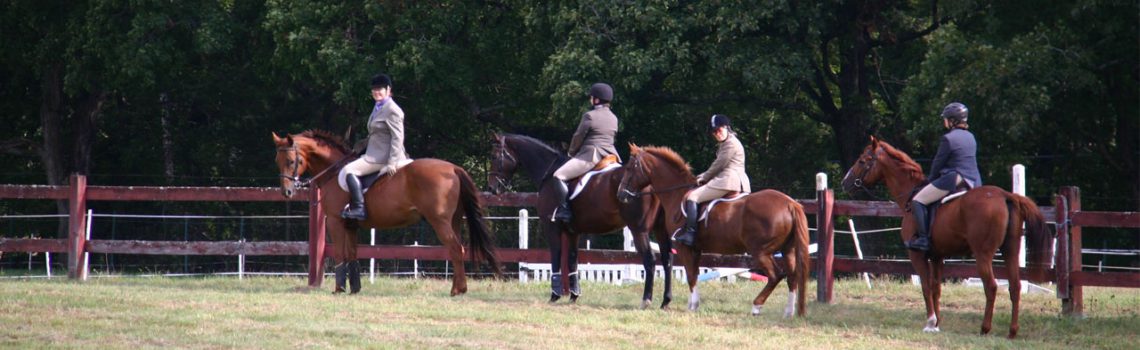
FYI: the image of the horses in the header is a herd of bouncy horses known locally as “Pony Henge”. This started out as one pony, many years ago, but is now a local attraction with people dropping off additions to the herd. Here’s what the herd looked like back in 2015 in the snow.

Very good article, Liz! Horses evolved here in North America when it was steppe/tundra. Horses are temperate zone animals. As you say, hay/forage is the best fuel for keeping a horse warm..as well as a layer of fat and plenty of water. But, as your picture of a most fetching Rosie shows, horses don’t mind the cold.
Living in the Pacific Northwest, the reason most of us blanket our horses is not to keep them warm, but to keep them dry. Rain rot is not uncommon here, especially if the horse is horse is muddy, dirty or long haired (as in Cushings, which my Arab eventually died of) when the rains begin. Their hair gets wet and dirty and stays wet and dirty. In late autumn, I would bathe my grey Arab when the weather was warm enough to let him dry off before I let him loose. Once the rains began, I’d keep him blanketed. I would take the blanket off at night, brush him up and then put the second one on him (allowing the first one to dry off overnight). Yes it was labor intensive, but it worked at keeping him clean without fear of rain rot.
He was on pasture 24/7 with a nice shed allowing him totally free access in and out. And yet–I would see him, his blanketed body inside the shed and his neck and head..no cover…sticking outside, in the rain.